
English| EUR
Suggested for you
More currencies
Choose a language
Terceira Island sits along one of the Atlantic's busiest cetacean migration corridors, with over twenty species passing through Azorean waters year-round. Understanding what you'll pay for a whale watching tour—and what that price covers—helps you choose the right operator and departure time for your trip.
Quick answer
Whale watching Azores prices on Terceira Island start at €65 per adult for a standard three-hour tour departing from Marina de Angra do Heroísmo. Most operators include safety briefings, life jackets, marine biologist commentary, and hydrophone listening sessions in the base fare. Prices rise slightly during peak summer months (June through September) when demand is highest and cetacean activity peaks.
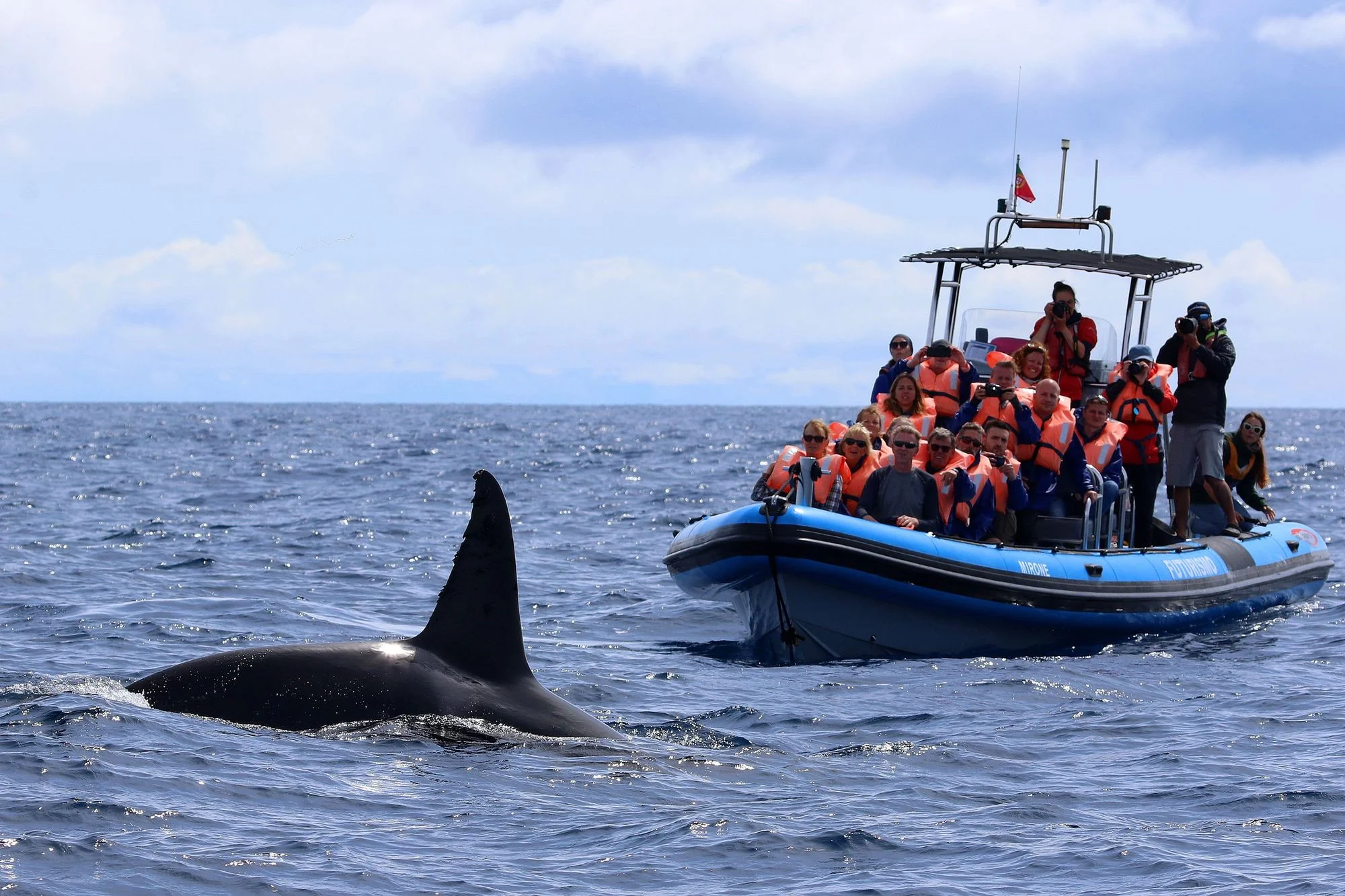
The Azores archipelago records more cetacean species than almost any other region in the North Atlantic, a density that transforms pricing from a simple ticket question into a conversation about access, expertise, and marine stewardship. Terceira's whale watching market operates on a model inherited from the island's historic whaling economy: small boats, experienced spotters stationed on coastal cliffs, and a rigid commitment to respectful observation distance. Whale watching azores prices reflect the operational reality of running expeditions in open Atlantic waters. The €65 starting rate covers fuel for rigid inflatable boats capable of handling two-meter swells, liability insurance mandated by Portugal's maritime authority, and salaries for certified skippers and marine biologists. Most tours employ land-based spotters—descendants of the vigias who once tracked whales for harvest—who radio real-time coordinates to boat captains, collapsing search time and maximizing encounter probability. That spotter network, invisible to most visitors, represents a significant fixed cost and explains why Azorean tour rates sit higher than Mediterranean dolphin excursions of comparable duration. Operators bundle different elements into their base fare. All include life jackets, waterproof gear on request, and a pre-departure briefing that covers hand signals, seasickness protocol, and the three-hundred-meter legal approach limit. Higher-tier departures add hydrophone systems that broadcast cetacean vocalizations in real time, underwater cameras, and post-tour species identification sessions. Group discounts apply inconsistently; some operators reduce per-person rates for parties of six or more, while others hold pricing flat regardless of headcount. Seasonal variation in cetacean tour costs remains modest. Summer commands a five-to-ten-euro premium as sperm whales, pilot whales, and multiple dolphin species converge in Terceira's offshore waters. Spring and autumn rates drop slightly despite strong sighting records, a pricing quirk driven more by hotel occupancy than marine biology. Winter tours, when available, run at the lowest annual rates but face frequent cancellations due to sea state.
“The spotter network that guides Terceira's whale watching boats descends directly from the cliff-top vigias who once tracked whales for the island's whaling fleet.”
The whale watching operations on Terceira Island maintain a consistent schedule throughout the week to facilitate visitor excursions.
The best arrival window is 08:00–14:00, as morning and early afternoon tours offer the best sea conditions and sighting opportunities. Planning your visit within this period helps ensure a smoother experience on the water.
16°C to 20°C; calm seas
Blue whales and fin whales migrate through these waters during these months.
22°C to 25°C; stable conditions
Higher temperatures bring diverse cetacean species and increased maritime activity.
18°C to 21°C; variable winds
The weather remains mild, allowing for consistent sightings with fewer visitors on tours.
—
Arriving at 08:00 optimizes your chances of favorable ocean conditions before daily wind shifts.
Verdict: For the best conditions and sightings, aim for weekday mornings between April and June.
Whale watching departures are located at the Marina de Angra do Heroísmo on Terceira Island. The marina is accessible by road via the main coastal routes leading into the city center.
Follow signs to Angra do Heroísmo city center and park at the public areas near the harbor
Request drop-off at Marina de Angra do Heroísmo
Walk towards the harbor area within Angra do Heroísmo city center
The precise boarding location is at Marina de Angra do Heroísmo, 9700-154 Angra do Heroísmo, Terceira Island, Azores, Portugal. Plan to arrive at the marina well ahead of your scheduled departure to locate the vessel.
Prepare for your whale watching tour with these essential steps and items.
Everything you need to know about whale watching azores prices
The starting price per adult for a whale watching tour on Terceira Island is 65 EUR. These whale watching azores prices cover the guided boat excursion and the expertise of your onboard crew.
We do not list multiple ticket tiers or packages here, as our role is to provide clear information on standard whale watching azores prices. You will find booking options via our official widget, which reflects current availability for these Atlantic marine expeditions.
Your excursion fee covers the marine biology guide service and the vessel transport needed to navigate local waters. This simple pricing model ensures transparency regarding your whale watching azores prices without hidden service fees.
No, there is no separate entrance fee required to access the harbor facilities. Your primary expense is the tour fee, which grants you boarding access at the Marina de Angra do Heroísmo.
While walk-ins depend on availability, it is recommended to plan your visit well in advance during peak season. Checking the schedule allows you to secure your spot for a reputable cetacean observation outing.
Policies regarding child participation and age-specific discounts are managed directly through the official booking portal. Please consult the operator site for details on family-friendly trip adjustments for your coastal sea adventure.
The best arrival window for your boat trip is between 08:00 and 14:00. Tours scheduled during these hours typically encounter the most favorable sea conditions and increased probability of sightings.