
English| EUR
Suggested for you
More currencies
Choose a language
Terceira sits along a North Atlantic migration corridor used by more than twenty cetacean species. Timing a whale-watching departure requires aligning three variables: the seasonal presence of target species, the daily window of favorable sea conditions, and the operational schedule of tour operators based at Marina d'Angra.
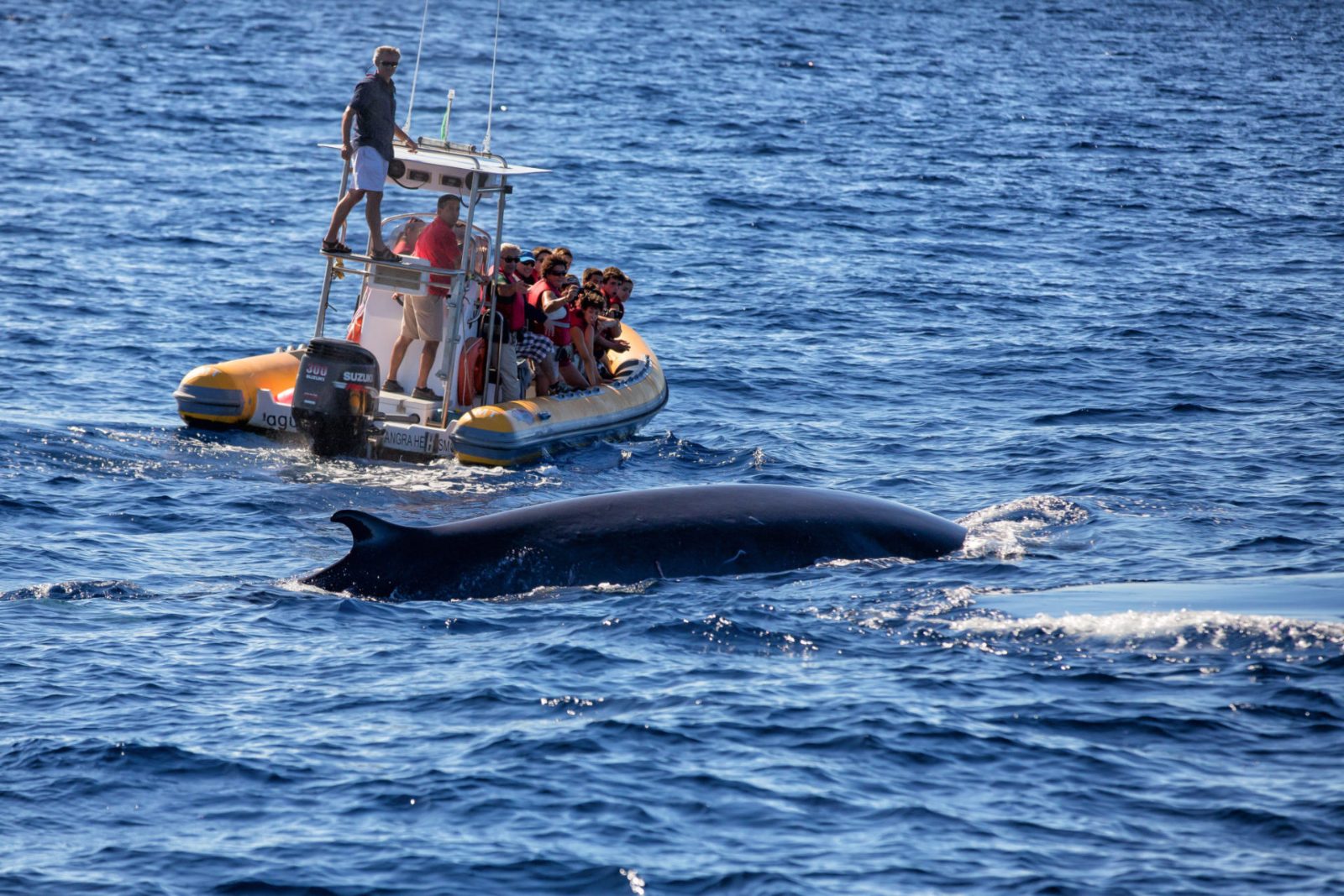
Quick answer
The best time to see whales around Terceira Island spans April through October, when resident and migratory species populate the waters off the Azores archipelago. Morning departures between 08:30 and 12:00 typically offer calmer seas and better visibility. Sperm whales are present year-round, while baleen species such as blue whales and fin whales pass through during spring and early summer migrations.
Terceira's position in the central Azores places it along deep-water channels where the continental shelf drops steeply within a few nautical miles of shore. These abyssal feeding grounds attract sperm whales throughout the calendar year, making the island one of the few European destinations where cetacean sightings are viable even in winter. The peak window for species diversity, however, runs from April through October, when migratory baleen whales traverse the region and sea conditions stabilize after the North Atlantic storm season. Morning departures yield the highest success rates. Operators departing Marina d'Angra between 08:30 and noon benefit from lighter winds and reduced swell, conditions that improve both passenger comfort and the ability of lookouts to spot blows and dorsal fins at distance. Afternoon tours operate regularly, but thermal heating over land can generate local wind patterns that roughen the sea surface by mid-day. The same morning window also coincides with increased cetacean surface activity following nighttime feeding cycles, particularly for deep-diving species like sperm whales that return to shallow depths to rest and socialize. Species composition shifts across the season. Blue whales and fin whales appear most reliably between March and June, tracking northward migrations that follow zooplankton blooms. Common dolphins and bottlenose dolphins remain present year-round but gather in larger pods during warmer months. Risso's dolphins and pilot whales frequent the waters south of Terceira, especially over submarine canyons where squid populations concentrate. What is the best time to see whales ultimately depends on whether the goal is encountering the widest range of species or targeting a specific animal: dedicated sperm whale watchers can book tours in any month, while those hoping to observe multiple baleen species should prioritize the April-to-June corridor. Operators based at Marina d'Angra maintain daily schedules from 08:30 to 18:00, with most tours lasting three hours. Weather permitting, two to three departures run each day during high season. Booking ahead secures preferred departure times and allows operators to group tours efficiently, which matters on days when sea conditions narrow the safe operating window.
“Terceira's offshore canyons attract sperm whales in every season, but the spring migration window brings baleen species that triple the encounter list.”
The optimal window for whale watching on Terceira Island occurs between April and October, when migration patterns align with favorable maritime conditions. We recommend arriving during the best arrival window of 08:30–12:00 to capitalize on calmer seas and higher visibility.
15°C–20°C; higher frequency of large baleen whales migrating through Azorean waters. Providing prime viewing opportunities.
22°C–26°C; peak season for sightings with stable sea states and warm air temperatures. Ideal conditions for long-distance observation.
18°C–22°C; the final month of the primary season, offering quieter conditions as migration continues. Good for those preferring fewer visitors.
—; The 08:30–12:00 arrival window typically offers calmer sea conditions. This timing provides the most consistent visibility for spotting marine life.
Verdict: The best period is from April to October, specifically utilizing the 08:30–12:00 arrival window for the most stable sea conditions.
The marina facility operates daily to support whale watching departures and visitor inquiries. Please align your arrival with these scheduled hours.
Access to the Marina d'Angra area is free of charge for all visitors. Commercial boat tours for whale watching involve separate fees that vary depending on the operator and specific excursion type.
Verdict: While the marina is free to enter, visitors pay commercial rates for whale watching boat tours, which fluctuate based on the specific provider and service selected.
Whale watching tours depart from Marina d'Angra at Porto das Pipas in Angra do Heroísmo. The marina is centrally located and easily accessible by vehicle or on foot from the historic city center.
Follow Estrada Regional 1-1 to Angra do Heroísmo and follow signs for Porto das Pipas
Walk towards the waterfront in Angra do Heroísmo and head to the Marina d'Angra complex
Request a drop-off at Marina d'Angra, Porto das Pipas
The best arrival window is 08:30–12:00 to ensure preparation for morning departures. Parking is available near the marina entrance at Porto das Pipas.
Whale watching tours require advance booking and preparation for open-water conditions.
Everything you need to know about what is the best time to see whales
The peak season for observing various cetacean species in the Azores generally spans from spring through late summer. Determining what is the best time to see whales often depends on migration patterns and local sea conditions. As of August 2026, visitors frequently book trips during these warmer months for optimal chances of encounters.
Yes, daily timing is important for a successful Terceira whale watching tour. Morning hours typically offer calmer sea conditions and better visibility, which are favorable for spotting wildlife. Knowing what is the best time to see whales throughout the day can significantly improve your experience.
We recommend the best arrival window of 08:30–12:00 for those planning their excursion. Arriving during this period aligns with the calmest sea states, which often helps when deciding what is the best time to see whales in Terceira. Please note that boat tours are commercial and departure times may vary.
While species like sperm whales are resident year-round, other baleen whales migrate through these waters during the spring. This makes the spring and summer period highly popular for those researching what is the best time to see whales. Monitoring local sea reports remains a useful strategy for planning your visit.
There is a 0 EUR entrance fee to access the marina area itself. However, boat tours are commercial operations and vary in price depending on the provider. You can find detailed information on the official site at https://www.water4fun.pt.
Yes, these excursions are generally suitable for families, though it is important to check specific age policies with the tour operators. Ensuring children are prepared for the marine environment helps make the trip enjoyable for everyone. Always verify safety requirements before booking your maritime adventure.
Bringing sun protection, a light waterproof jacket, and non-slip footwear is recommended for your time at sea. Sea conditions can change, so being prepared ensures you focus on the horizon while searching for marine life. Remember to bring a camera to capture your sightings during your visit to the marina.